Best Water Shop
Different digital touchpoints in the BWT Best Water Shop in Mondsee
Role
UX/UI Designer
Industry
Water Treatment
Duration
4 months
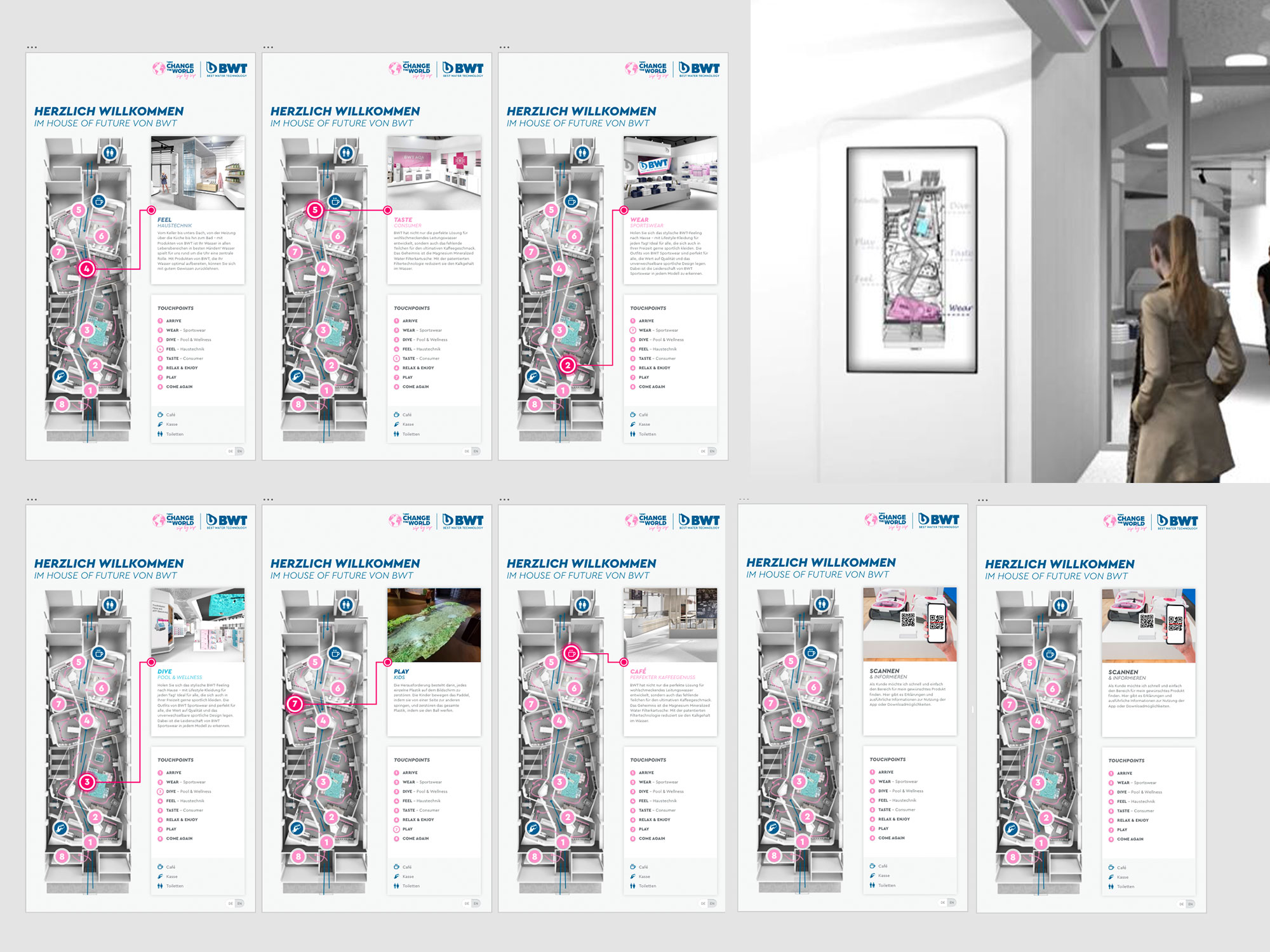
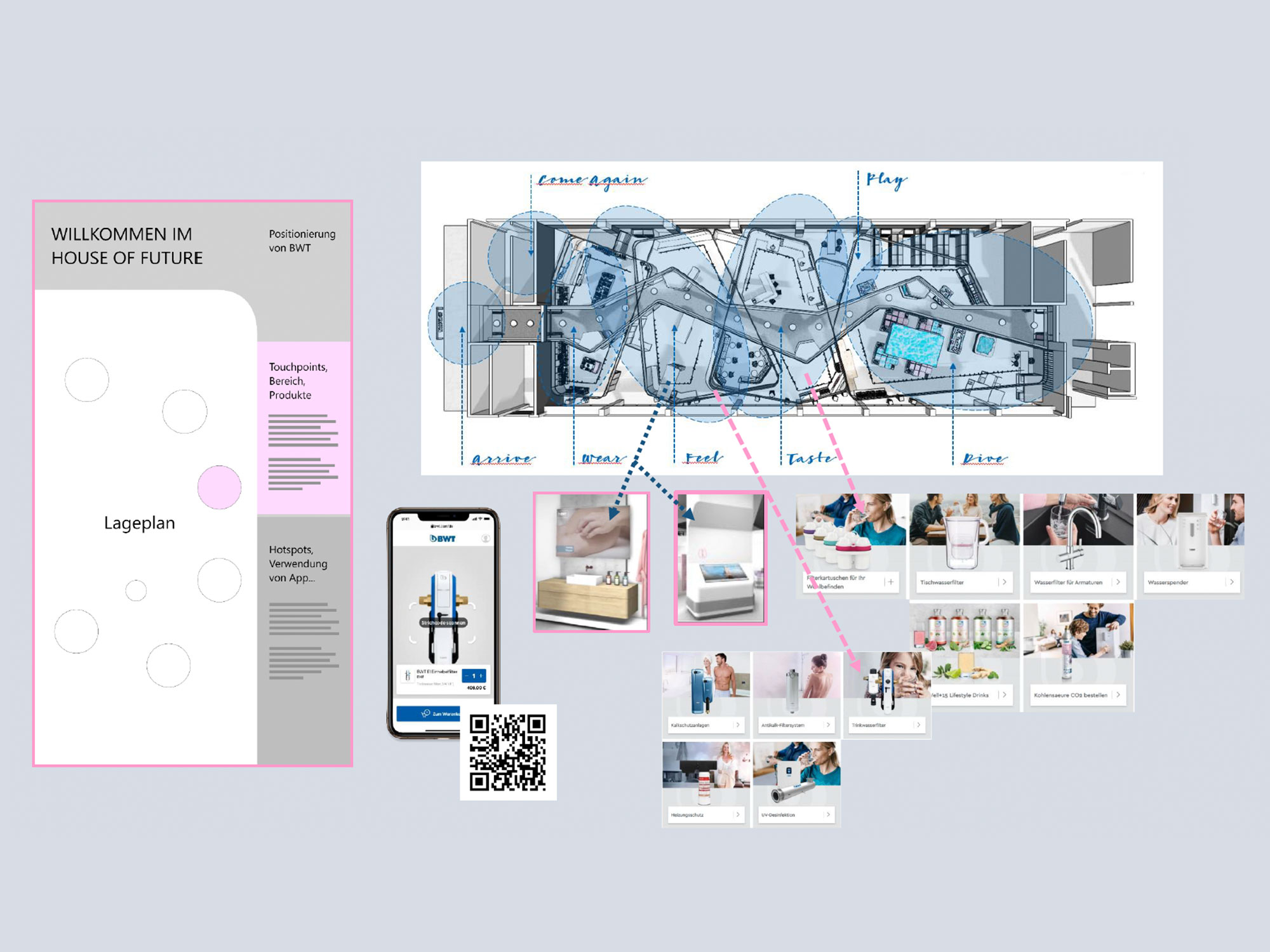
Discovery and Research
The foundation of the project was laid through a series of collaborative meetings with colleagues and an external firm. The objectives of these discussions were:
- Understanding user pain points and expectations.
- Setting clear goals for the digital touchpoints.
- Establishing a shared vision and strategy.
Key Outcomes:
- Development of user personas to guide design decisions.
- A roadmap aligned with customer and business needs.
Ideation and Journey Mapping
Using insights from the discovery phase, I collaborated with the team to map user journeys, visualizing how customers would interact with the shop’s digital elements.
Approach:
- Identified key touchpoints along the customer journey.
- Explored how different users (e.g., tech-savvy vs. traditional shoppers) might navigate the systems.
- Collaborated on feature prioritization to enhance engagement and functionality.
Result: A blueprint for how digital touchpoints would complement and enhance the in-store experience.
Design Execution
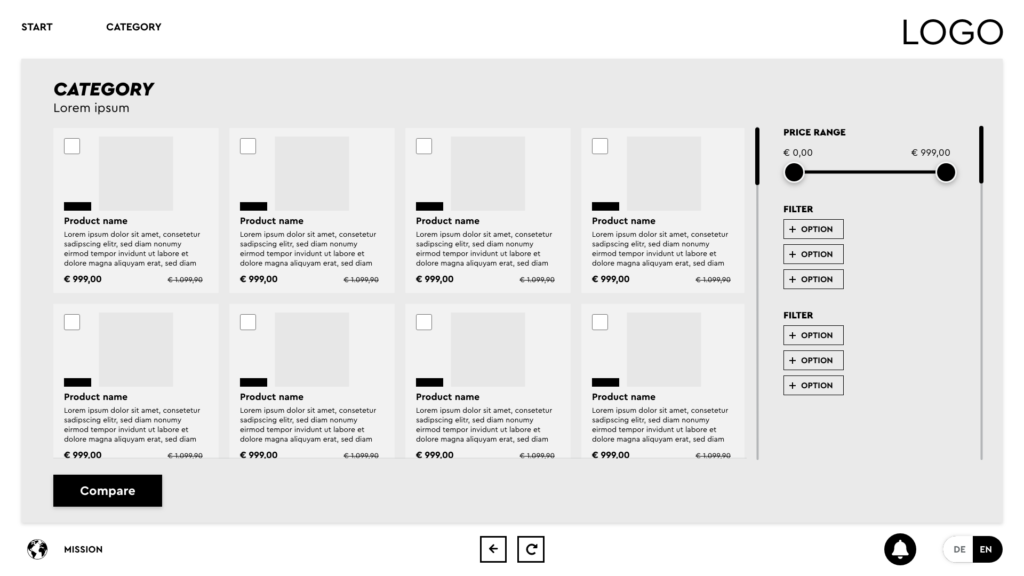
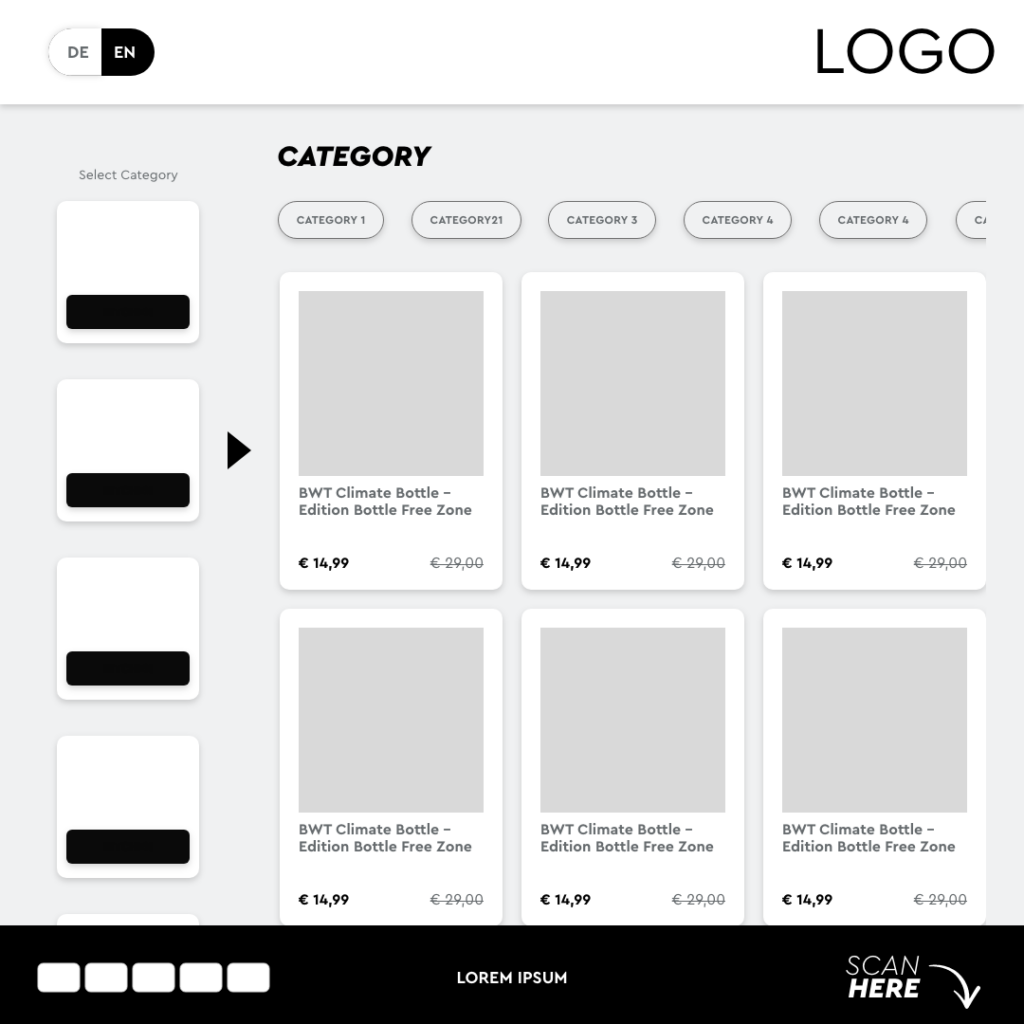
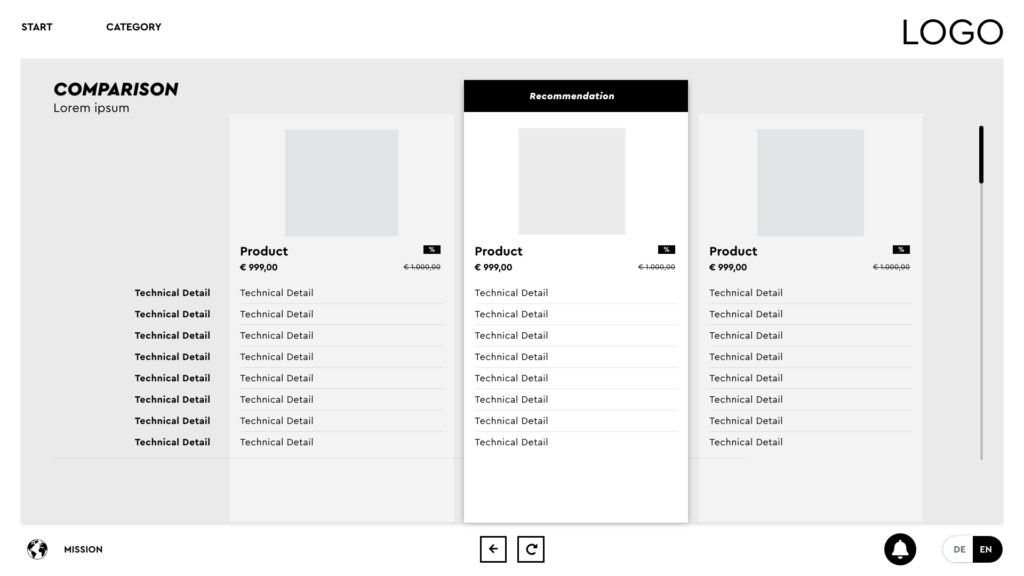
Wireframes:
I created wireframes focusing on intuitive navigation and accessibility, ensuring every interaction was straightforward and user-friendly.
Prototypes:
Interactive prototypes were developed using Adobe XD. These allowed stakeholders to experience the digital systems firsthand, fostering early feedback.
UI Design:
I crafted visually appealing, brand-aligned interfaces that utilized BWT’s color palette and typography. This ensured the designs resonated with the brand identity while prioritizing usability.
Challenges Overcome:
- Balancing aesthetic appeal with functional simplicity.
- Iterating designs based on multi-level feedback loops.
User Testing and Iteration
To validate and refine the designs, I conducted multiple user testing sessions employing both qualitative and quantitative methods.
Key Activities:
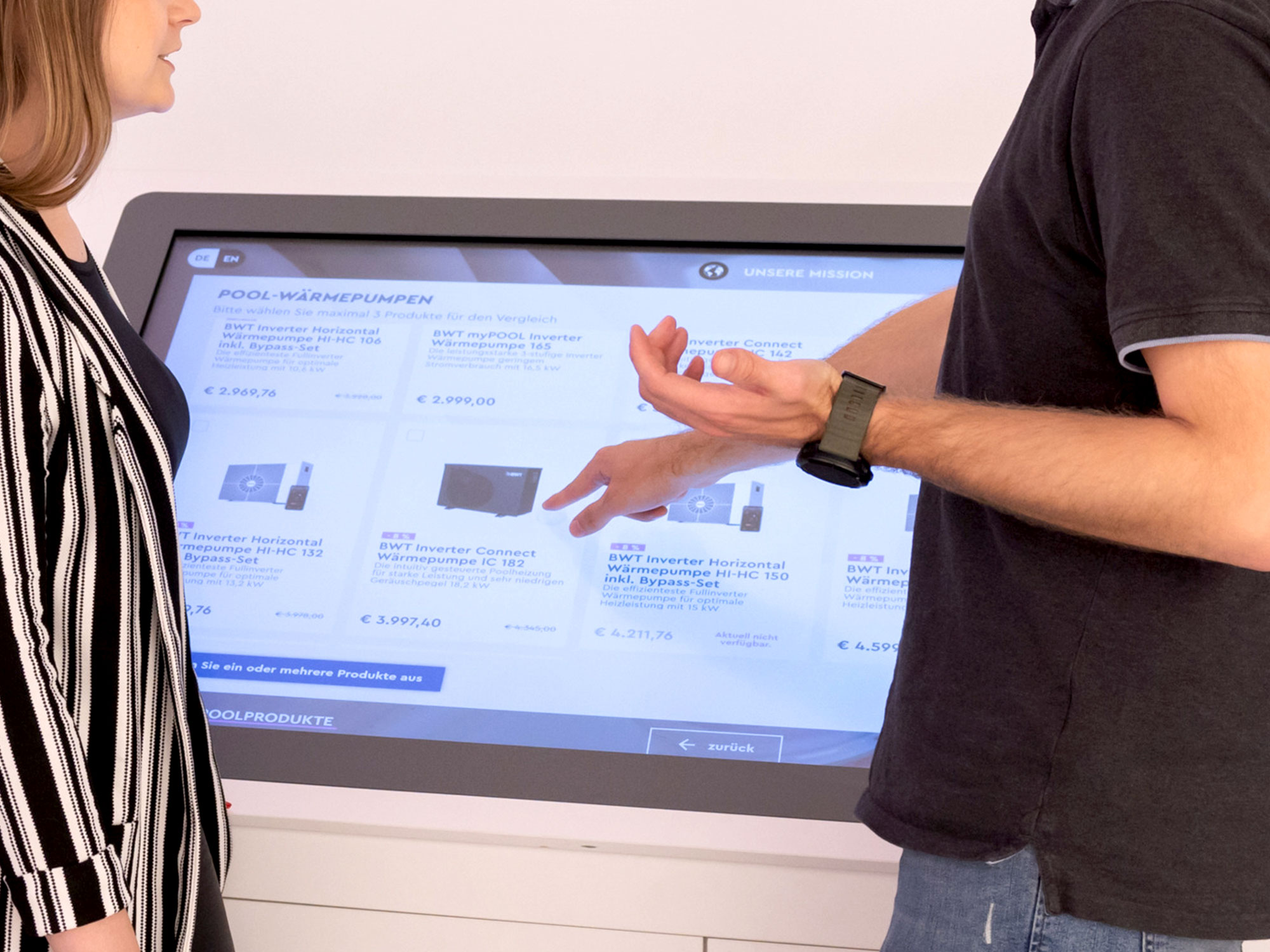
- Observed users interacting with prototypes.
- Collected feedback on ease of use, navigation, and visual design.
- Analyzed data to identify pain points and areas for improvement.
Iteration Highlights:
- Improved configurator logic for quicker and more personalized experiences.
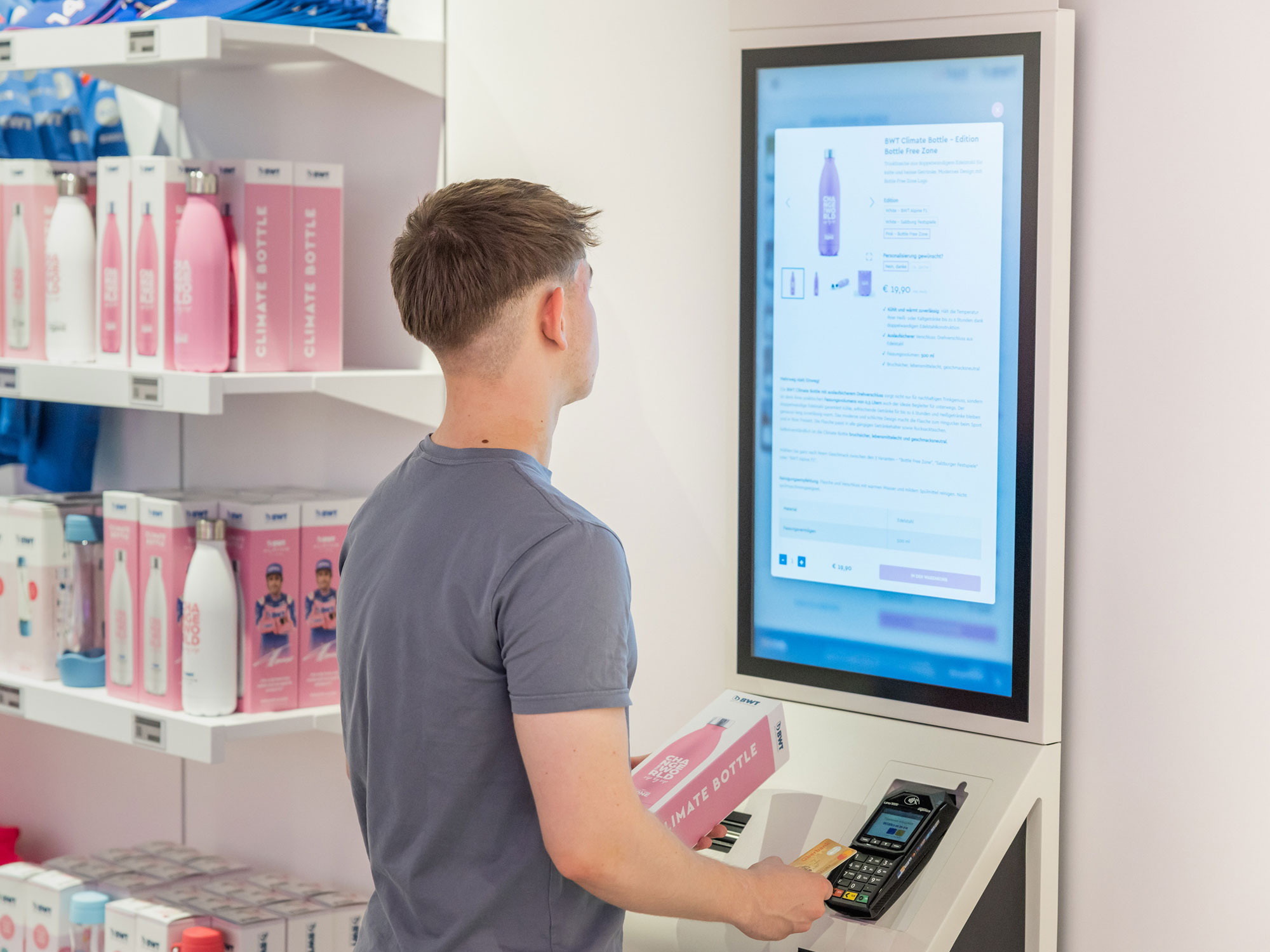
- Enhanced button placement and labeling for the self-checkout system.
- Simplified navigation flows for info terminals.
Final Presentation and Documentation
The project concluded with a comprehensive presentation and documentation that detailed:
- The design rationale and iterative process.
- Insights gained from user testing and corresponding improvements.
- Recommendations for future scalability of the digital systems.
Impact:
- Demonstrated potential for increased user satisfaction and reduced checkout times.
- Provided a robust framework for ongoing digital innovation.
Results and Learnings
Achievements:
- Delivered a cohesive and customer-focused digital experience.
- Significantly improved usability metrics through iterative design.
- Received positive feedback from stakeholders and end-users alike.
Takeaways:
- Collaborative brainstorming and user-centric testing are critical for successful design outcomes.
- Early prototyping fosters stakeholder alignment and accelerates feedback cycles.